
NIH Issues Clinical Trial Results on Silver Diamine Fluoride
National Institutes of Health (NIH)
Coating stops tooth decay in children
At a Glance
- A clinical trial found that a topical treatment called silver diamine fluoride stops cavities in young children from getting worse.
- The simple treatment could prevent surgery and other serious consequences for children with severe tooth decay.
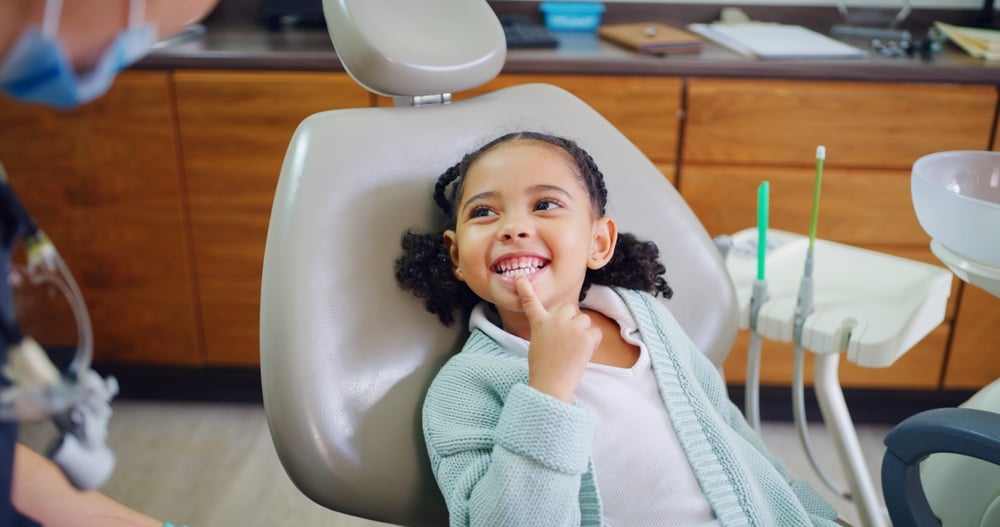
Silver diamine fluoride stopped tooth decay in children ages one to six.
Proper dental care and hygiene are vital for children’s overall health. Yet about 40% of U.S. children have tooth decay, also called dental caries. Tooth decay is the most common chronic disease in U.S. children and adults. It can cause pain, infections, tooth loss, and lead to missed school days and high treatment costs. Everyone has bacteria living in their mouths that stick to their teeth and form a film called plaque. These bacteria break down sugar and starch from food and drink to produce acid. That acid eats away at the hard outer coating on teeth called enamel. Over time, this can lead to holes in the enamel, called cavities. Silver diamine fluoride is a topical medication that can be used to treat cavities. It is inexpensive and easy to apply. Silver diamine fluoride kills the acid-producing bacteria in the cavity. It also helps stop the cavity from getting bigger by hardening the tooth again. But the Food and Drug Administration (FDA) has lacked enough data to approve silver diamine fluoride to treat severe tooth decay in children. An NIH-funded research team led by Dr. Margherita Fontana of the University of Michigan School of Dentistry set out to test silver diamine fluoride for treating severe early childhood tooth decay. The study was published in JAMA Pediatrics on July 27, 2026. The team enrolled 830 children between the ages of one and six years old with severe early childhood caries including at least one cavity. The children were treated with either silver diamine fluoride or a placebo at the start of the study and then again at six months. They received check-ups at the start of the study and then at three, six, and eight months. Silver diamine fluoride was effective at stopping tooth decay. Treatment stopped decay at more than twice the rate of the placebo group. More than half of the treated cavities showed no further decay during the study period. In contrast, only around 20% of the untreated ones showed no further decay. No difference in dental pain rates was seen between the two treatment groups. Silver diamine fluoride did permanently stain the decayed portion of the teeth. However, these are primary, or baby, teeth that will fall out. Silver diamine fluoride is easy enough to apply that pediatricians, who see young patients more frequently than dentists, could be trained to recognize dental decay and treat it.
“If we want more children and families to benefit from this treatment, we need rigorous evidence showing both that it works and that it’s safe,” Fontana says. “This is a very effective and safe treatment—even in children as young as one.”
Related Links
- Identifying a new contributor to tooth decay
- Swarms of tiny robots scrub teeth
- Vaping alters mouth microbes
- Healthy mouth for kids
- Don’t give in to gum disease
- Dental caries (tooth decay)
- The Tooth Decay Process: How to Reverse It and Avoid a Cavity
- About Cavities (Tooth Decay)
References
Efficacy of Silver Diamine Fluoride on Young Children With Severe Early Childhood Caries. Fontana M, Moursi A, Gonzalez-Cabezas C, Khera D, Levy SM, Eckert GJ, Katz BP, Tenuta LMA, Campos MS, Karl E, Boynton J, Chinn C, Sheen A, Kolker J, Warren J, Thorpe E. JAMA Pediatr. 2026 Jul 27:e262567. doi: 10.1001/jamapediatrics.2026.2567. Epub ahead of print. PMID: 42507437.
